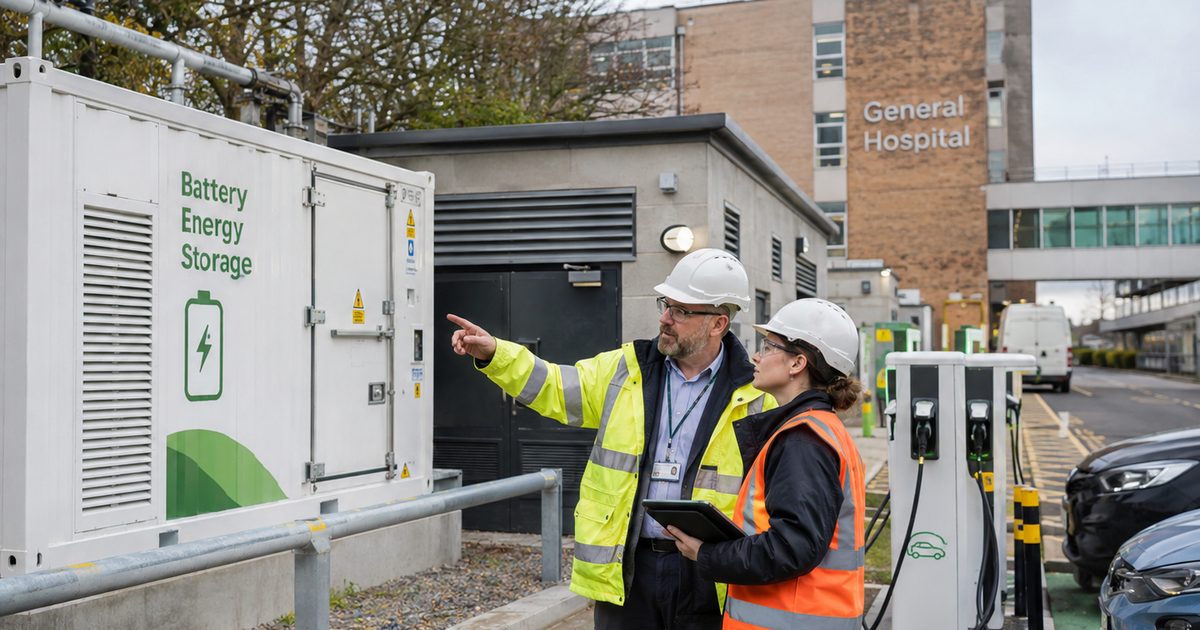
For most hospital estates the biggest single source of carbon is heat from burning gas, in boilers and CHP. Replacing it means moving to electric heat pumps and heat networks, which needs electrical capacity, money and time. The practical order is: measure what you use and when, cut waste, check your electrical headroom, add on-site generation where it pays, then replace fossil heat as plant reaches the end of its life.
Looking for the numbers alone? See NHS estates energy facts and figures.

The scale of it
NHS trusts in England spent about £14.4 billion running their estates in 2025/26, and the Estates Returns Information Collection (ERIC) records the estate's energy use at around 11 billion kWh a year.5 The NHS is the single biggest energy user in the public sector, with an energy bill estimated at around £1.3 billion that has almost doubled since 2019.7 The backlog of maintenance in the English estate was estimated at £15.9 billion in 2024/25, and much of it sits in the same boiler houses, pipework and switchrooms that decarbonisation depends on.6
In Scotland, building energy for heat and power remains the largest contributor to the emissions covered by NHS Scotland's 2040 net zero target.3 The picture is similar in England and Wales.
Five pressures at once
1. Targets with dates
The NHS in England has committed to net zero by 2040 for the emissions it controls directly, with an 80% cut by 2028 to 2032.1 NHS England reports that these emissions have already fallen by over 68% since 1990 and that it remains on track for the interim target.2 Scotland and Wales have their own dates, and Wales has a firm end date for fossil-fuelled CHP. See net zero targets across the UK.
2. Funding has changed shape
The Public Sector Decarbonisation Scheme (PSDS) funded a large share of hospital heat projects in England from 2020, but no further money is being committed beyond projects already awarded. Phase 4 projects run to March 2028.8 Newer money is smaller and more targeted, such as Great British Energy's solar programme for NHS sites.9 Projects increasingly need to pay for themselves, or use loans, partnerships and power purchase agreements. See funding routes.
3. The grid connection
Heat pumps replace gas with electricity, so a site's peak electrical demand rises, usually in the coldest weeks. Many hospitals already run close to their agreed supply capacity, and upgrading a connection can take years. Removing a gas CHP engine can add hundreds of kilowatts to grid import on its own. See electrical capacity for electrification.
4. Buildings that never close
Acute hospitals run around the clock, with theatres, imaging, sterile services, labs and wards that cannot be switched off for a works programme. Every change is planned around clinical risk, infection control and resilience, which slows delivery and raises cost.
5. Falling grid carbon changes old answers
The UK government's electricity carbon factor for 2026 reporting is about 0.13 kg CO₂e per kWh, down from 0.177 for 2025.10 That makes on-site gas CHP look worse on carbon than it did when many systems were installed, and makes electric heat look better every year. See moving away from gas CHP.
A practical order of work
- Measure. Load 12 months of half-hourly electricity data for every meter into the analyser. You will see base load, day and night use, out-of-hours use in clinics and admin buildings, and each site's peaks against its agreed supply capacity.
- Cut waste first. Controls, ventilation schedules, theatre setback, LED lighting and steam losses are usually the cheapest carbon to remove, and they reduce the size of everything you buy afterwards. See energy efficiency in hospitals.
- Know your headroom. Before you design a heat pump scheme, know how much spare electrical capacity each site has, in which months, with and without CHP running.
- Generate where it pays. Hospitals use electricity all day, every day, so they use almost all of the output of a well-sized solar system. Use the solar calculator with your own half-hourly profile. See solar on healthcare estates.
- Plan the heat. Write or refresh a heat decarbonisation plan that matches each boiler, CHP engine and steam system to its replacement date. See heat decarbonisation.
- Fund and procure. Match each project to a funding route and a compliant procurement route, and build the business case from measured data rather than estimates.
Where half-hourly data fits
Half-hourly data is the evidence behind almost every step above. It shows the real base load you are paying for, proves whether a controls change worked, gives the peak demand a DNO will ask about, and sets the share of solar output a site will use. It is also data you already have: your electricity supplier records it for billing. See how to get your half-hourly data.
Sources
Checked 18 November 2026.
- NHS England: Delivering a net zero NHS
- NHS England: Five years of a greener NHS, progress and forward look
- Scottish Government: NHS Scotland climate emergency and sustainability annual report 2025
- Welsh Government: NHS Wales decarbonisation strategic delivery plan 2025 to 2030, Part 6: buildings and land
- NHS England Digital: Estates Returns Information Collection, summary page and dataset for ERIC 2025/26
- Building Better Healthcare: ERIC 2024/25 shows £15.9bn maintenance backlog (31 October 2025)
- Portsmouth Hospitals University NHS Trust: extra solar panels funded by Great British Energy (27 October 2025)
- Salix Finance: Public Sector Decarbonisation Scheme update
- Great British Energy: first anniversary announcement (15 May 2026)
- Department for Energy Security and Net Zero: Greenhouse gas reporting, conversion factors 2026
Questions people ask
What is the biggest source of carbon on a hospital estate?
Usually gas burned for heat and hot water, in boilers and CHP engines. Grid electricity is a smaller and falling share as the grid gets cleaner.
Where should an estates team start?
With measurement and waste: load your half-hourly data, fix controls and schedules, and check electrical headroom before designing heat pump schemes. It costs little and makes every later project smaller.
Does this apply to private hospitals?
The engineering is the same. The targets and funding differ: independent providers set their own targets, many through the IHPN commitment, and use private finance. See our page on private and independent hospitals.