In England, the Public Sector Decarbonisation Scheme is not funding new projects beyond those already awarded, and Phase 4 projects run to March 2028.1 The main new public money for NHS estates is targeted: Great British Energy's solar and battery funding, and the clean energy upgrades announced for 82 trusts in February 2026.4,5 Scotland and Wales run their own schemes. Beyond grants, more projects now use power purchase agreements, energy performance contracts and other funded models that pay back from savings.
England
Public Sector Decarbonisation Scheme (PSDS)
PSDS has paid for heat pumps, insulation, LED lighting, solar and controls across the public sector since 2020, including many hospital energy centres. The government has confirmed it will commit no further funding beyond projects already awarded. Those projects remain funded, with Phase 4 running until 31 March 2028.1 If your trust holds a Phase 4 award, delivery to time and budget is now the priority. Phase 4 also set a maximum grant carbon cost of £510 per tonne of CO₂e saved over a project's life, a useful benchmark for comparing any future project.2
Great British Energy and NHS England solar funding
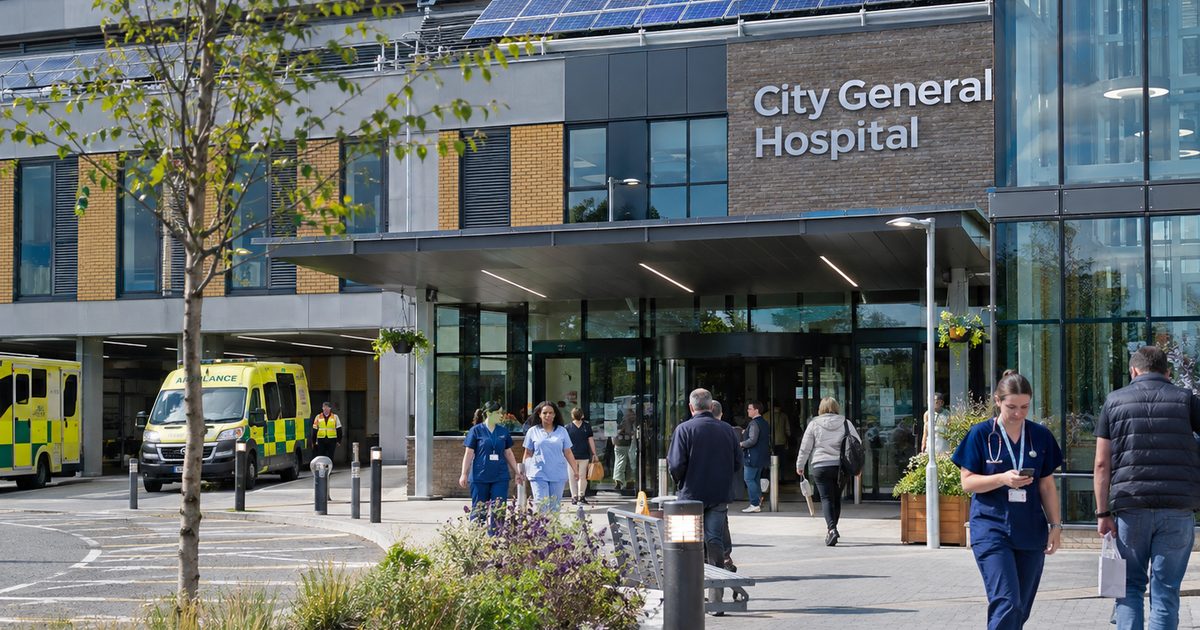
In March 2025, £100 million from Great British Energy was announced for NHS trusts to install solar panels and battery storage: 132 projects at 78 trusts, covering around 200 sites.3 By May 2026, 162 NHS sites in England had completed solar installations through the programme, and a further £25 million was announced for up to 40 more NHS sites.4 These rounds have had short application windows and tight delivery deadlines, so trusts with surveyed, ready-to-go roofs and car parks have been best placed.
Clean energy upgrades, February 2026
In February 2026 the government announced that 82 NHS trusts, alongside eight military sites and a prison, would share £74 million for clean energy and efficiency upgrades, including £9 million delivered with Great British Energy for batteries and solar.5,6
The Local Power Plan
Published in February 2026 and backed by Great British Energy, the Local Power Plan uses a mix of grants, loans and local investment, and aims to open up long-term power purchase agreements between community energy groups and public buildings.7 Large, constant hospital loads make good partners for that kind of arrangement.
Scotland
NHS boards were funded through the Scottish Green Public Sector Estate Decarbonisation Scheme, which has now closed. The Scottish Government says health boards can now apply for capital funding to Scotland's Public Sector Heat Decarbonisation Fund, administered by Salix, and that estate decarbonisation has also been funded from the health portfolio's capital budget.8 A separate Public Sector Clean Heat Development Fund offered up to £30,000 a project for early development work, with applications closing in September 2026.9 NHS Scotland also treats renewable power purchase agreements as a core part of its strategy.12
Wales
The Wales Funding Programme, run by Salix for the Welsh Government, includes Invest to Save, which offers interest-free finance to public bodies without borrowing powers, such as health boards.10 The Welsh Government Energy Service gives technical, commercial and procurement support, and had supported 57 installed projects for NHS Wales health boards and trusts by its 2024 to 2025 report.11
Funded and partnership models
- Power purchase agreement (PPA). A funder pays for, owns and maintains a solar system on your site, and you buy its electricity at an agreed rate. No capital, but a long contract. It suits constant-load sites like hospitals. See paying for solar.
- Energy performance contract (EPC). A contractor designs, installs and often maintains a package of measures, and guarantees the savings. Frameworks such as RE:FIT are commonly used to procure them.
- Energy services or heat-as-a-service. A partner builds and runs an energy centre and sells heat and power to the site over a long term.
- Your own capital. The cheapest money if you have it. Measured half-hourly data and a clear payback make the case at a capital planning group far stronger.
Being ready when money appears
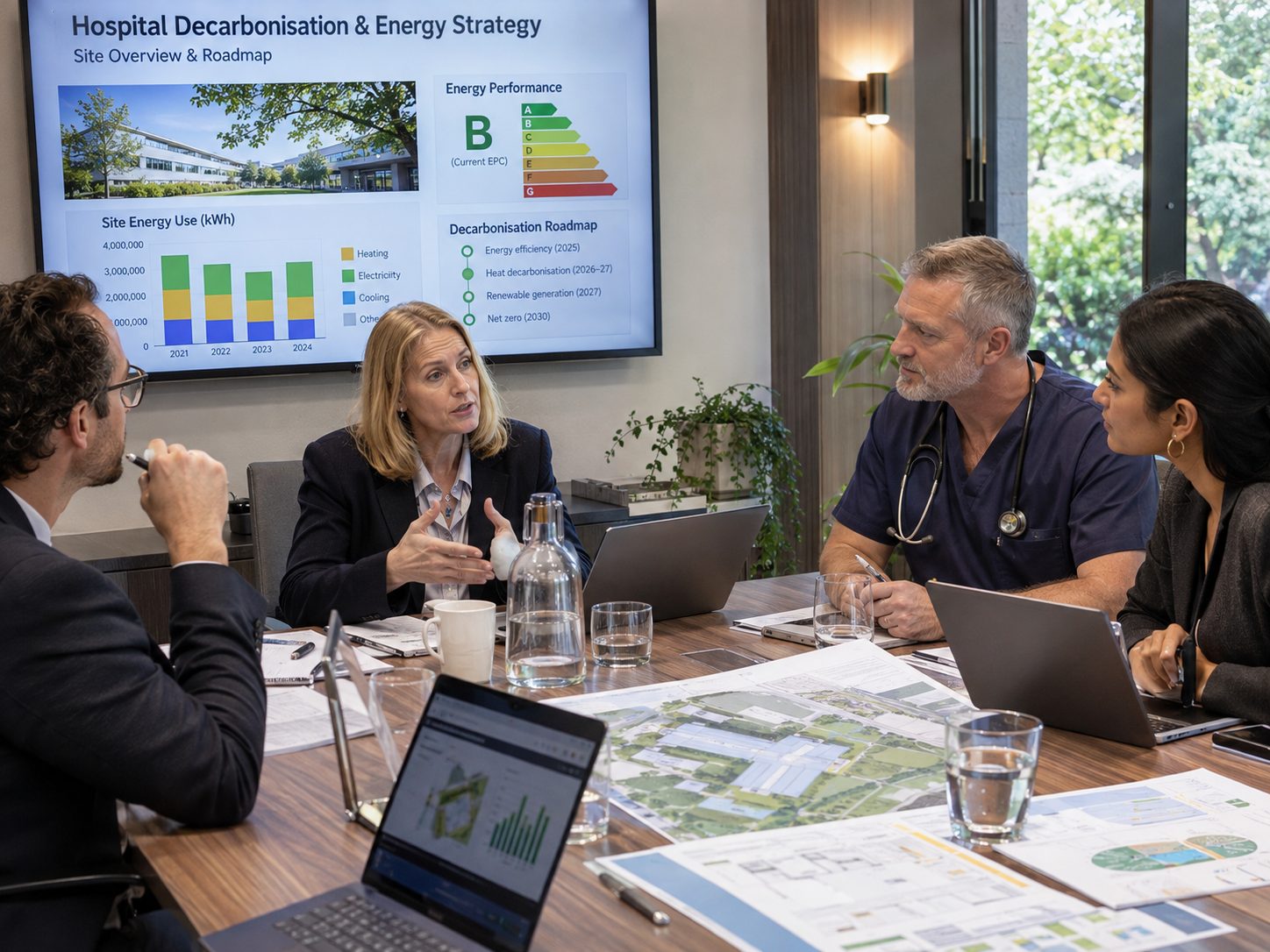
Recent rounds have rewarded trusts that could move quickly. What helps most:
- A current heat decarbonisation plan, with each site's plant and replacement dates.
- Twelve months of half-hourly data for every meter, analysed, so you can show base load, peaks and headroom straight away.
- Agreed supply capacities and any known DNO constraints, site by site.
- Roof and car park surveys for solar, with a first estimate from the solar calculator.
- A procurement route agreed in advance, such as a framework your organisation can use.
Sources
Checked 18 November 2026.
- Salix Finance: Public Sector Decarbonisation Scheme update
- Salix Finance: Phase 4 Public Sector Decarbonisation Scheme, project criteria
- NHS England: £100 million from Great British Energy for NHS trusts to install solar panels and battery storage (21 March 2025)
- Great British Energy: first anniversary announcement (15 May 2026)
- GOV.UK: Clean energy upgrades for hospitals and military sites (February 2026)
- Tees, Esk and Wear Valleys NHS Foundation Trust: new clean energy upgrades at our trust (6 February 2026)
- GOV.UK: Local Power Plan
- Scottish Government: NHS Scotland estate decarbonisation project information, FOI release (19 May 2026)
- Salix Finance: Scottish Government opens clean heat fund for public sector
- Salix Finance: Wales Funding Programme (Salix loans and Invest to Save)
- Welsh Government: Energy Service impact report 2024 to 2025
- Scottish Government: NHS Scotland climate emergency and sustainability annual report 2025
Questions people ask
Is the Public Sector Decarbonisation Scheme still open?
No new money is being committed. Projects already awarded remain funded, with Phase 4 running until 31 March 2028.
What funding is there for solar on NHS sites?
Great British Energy has funded solar at hundreds of NHS sites since 2025, with a further £25 million announced in May 2026 for up to 40 more sites. Rounds have been short, so have surveys and data ready. PPAs avoid the need for capital altogether.
Can health boards in Wales borrow for energy projects?
Health boards do not have borrowing powers, so the Wales Funding Programme offers Invest to Save, interest-free finance for public bodies without them.